
Methods for
scenario planning
Overview
Given the extreme uncertainty about our world, how can any organization develop plans meaningfully? One way is to employ scenarios, different relevant, plausible, contrasted, and challenging worlds that we may have to live in, as a means to craft and test our strategic options. This course will show the steps in such a scenario planning process, including how to generate strategic alternatives and wind tunnel them to ensure that strategies are robust. Moreover, various scenario methods will be mentioned, and we will see how AI can be employed to shorten or reinforce the process
Facilitator
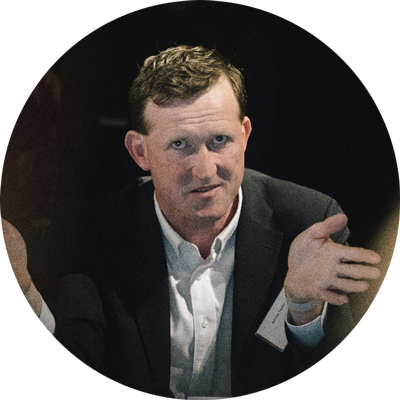
Adrian Taylor
Founder, 4Sing (ForeSight to Strategy for Security and Sustainability in Governance) GmbH
Adrian has over 30 years of experience working on foresight. He started as a scenario planner in 1992 when working for a joint venture with Global Business Network whilst based in Brussels (1993). After stints working in the European Commission and in Academia (Georgia Tech, Atlanta), he joined a software company making tools for scenario and strategy work. In 2008 he then founded 4Sing as a vehicle to support the Government of the Republic of Singapore in setting up its “Risk Assessment and Horizon Scanning” programme, where Adrian helped determine and template the methods used, as well as training staff and backstopping the Prime Minister’s Office. Since then, Adrian (and now also his colleagues) have helped clients develop their own in-house foresight to strategy capacities and run strategy processes for clients, as well as moderating knowledge exchange events and conferences. He has experience in using many methods, from Design Thinking through to Scenario writing and leverages Open-Source Intelligence and software tools such as 4Strat and the Parmenides Eidos™ decision-making tool suite, which both support (but not in any way replacing) human reasoning to anticipate future changes in the world outside as well as to develop robust strategies and monitoring tools to evaluate the implementation of the strategies.
Course Details
Dates
22 – 23 September 2026
Time
9:00 AM – 4:00 PM
Location
Emirates Towers, 3D Office
Delivery Format
Physical
Language
English
Pre-requisites
No Prerequisites
Target Audience
First experience of foresight , Strategists who want to see how scenarios can add value to their work.
4,750
AED
Fees
Outline
Day 2
01
Identify why foresight and scenarios are useful
02
Choose real-life subjects to work on during the course
03
Identify key strategic questions (“focus”)
04
Pick driving forces affecting these strategic questions
05
Develop scenarios using Morphological Analysis
Day 2
01
Complete the scenarios built using Morphological Analysis
02
About making scenarios using alternative methods (2X2, AI, actor scenarios)
03
Develop various strategic options including inspiration from the scenarios
04
Wind Tunnel the various strategies for robustness when faced with the scenarios
05
Identifying learnings and where to apply them
Objectives
By the end of the module, the candidates will be able to:
→
Apply scenario planning to identify key drivers of change, construct scenarios, and integrate these scenarios into strategic decision-making.
→
Develop a strategy that has been tested against various scenarios, and which is thus robust when faced with complex future challenges.
→
Identify which scenario methods have what advantages regarding their speed, nature of stakeholder and what needs to be achieved.
Outcomes
At the end of the course, the participant will be able to:
→
Outline what scenario planning brings and what steps are involved in doing it.
→
Gain foresight/strategy content insights (e.g. on drivers of change or strategic options into issues that participants in the room are working on.
→
Identify where this approach can be used in your organization to increase innovation or resilience.
Agenda
9:00 – 9:30
Welcome Note
9:30 – 10:15
Participants, expectations, participant case studies
10:15 – 10:45
Coffee break
10:45 – 11:45
Example of foresight to strategy. Why is it useful?
11:45 – 12:30
Participants identify strategic key questions
12:30 – 13:15
Lunch break
13:15 – 14:00
Participants identify driving forces of scenarios
14:00 – 14:30
Participants develop scenarios 1
14:30 – 14:45
Coffee break
14:45 – 15:45
Participants develop scenarios 2
15:45 – 16:00
Recap and close
```html
```
9:00 – 9:15
Recap Previous Day and Learning from overnight
9:15 – 9:45
Presentation back of scenarios developed day 1
9:45 – 10:45
Participants see other methods to create scenarios
10:45 – 11:00
Coffee break
11:00 – 12:30
Participants develop strategies
12:30 – 13:15
Lunch break
13:15 – 14:30
Participants wind tunnel strategies against scenarios
14:30 – 14:45
Coffee break
14:45 – 15:30
Learnings from the training and where to apply them
15:30 – 16:00
Recap and close